
It is easy to get lost in the data jungle of the internet and the social media. You come across so many different, sometimes weird ideas and experiences. How do these affect your mental map of the world?
Read More
“The Creation is still ongoing” Let’s start with the key question: is the universe incidental, random without purpose and therefore ultimately meaningless? Or has the world been created by God, corrupted by mankind and waiting to be saved and perfected by God? It is becoming increasingly clear that the creation had never been completed, but is still ongoing! The universe is evolving. Life has become increasingly diverse...
Read More
“Cooperation more so than competition has supported the evolution of life” For years scientists have been searching for the origin of life. They do so in mainly two ways: the first route compares plants and animals with fossils from a distant past. The second approach explores in the laboratory, how primitive organisms can grow out of simple chemical reactions. The first method is based on a strong relationship between all forms of...
Read More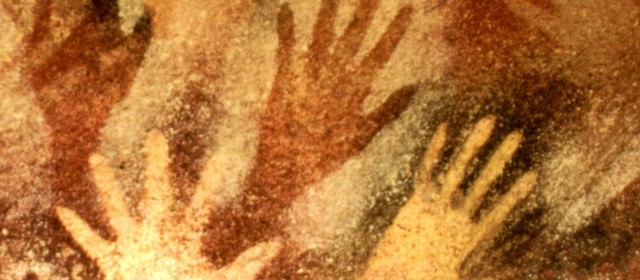
What makes us human?
Read More
How can I know what I think, when I have not yet heard what I say?! (handicapped child) Words can make a strong impression and stick. This applies to us, but perhaps even more so to primitive people. Old Indian traditions greatly valued reticence, just because one appreciated the power of words. By speaking a word, one creates a reality. Words are not just strengthening the ability to think. They are the source of thinking. By...
Read More
Neanderthals (or pre-modern man) probably had a morality of so called direct reciprocity: I will treat you like you treat me, so both of us can be better off. This works well in small groups. But when our modern ancestors started to live together in larger groups, people did not know all groups members by name anymore. In such cases word language offered a novel way to cooperate: on the basis of a good reputation. If you treat other...
Read More
In bigger groups people need to deal with new forms of cooperation and competition. They encounter a social world that is both overwhelming and threatening; creative and destructive, powerful as well as violent. How to find a way in this new world? It will be vital to transfer knowledge and experience in a way that can easily be memorized- like stories and rituals. All religious traditions have rites and myths, intended to preserve...
Read More
When hunter-gatherers became farmers their dwelling place, social life and religion changed dramatically. By domesticating plants and animals farmers acquired property. Harvest surpluses were stored and exchanged for goods. People started trading, some got rich and others poor. Strong and clever people were admired as ever, but strength and brains are not necessarily transferred to children. Possessions and debt are. Some acquire...
Read MoreIs power normal or not?
Read More“Go forth“ (Genesis 12:1) Some 2000BC ago there were big cities in the land between the Euphrates and the Tigris. Uruk and Ur each had 50.000 people living together: rich and poor; slave and freeman; various professions. In these societies ‘survival in nature’ was gradually being replaced by surviving in the city with all its social relations, interests and conflicts. Less than in the past people saw themselves as a member of the...
Read MoreWRITING (1500BC) “Writing unlocks the future, not just the past.” In prehistoric times knowledge had to be memorized and transferred from person to person. This requires such much effort that there was little room for innovation. Oral cultures are traditional: “the truth is not new and novelty is not true”. But writing is going to change this. On the one hand writing instead of speaking does impoverish communication. On the other...
Read More

RESPONSIBILITY (100BC) “Good thoughts, good words, good deeds” We have seen before that old religions were meant to help people controlling nature (see ‘gods’) and keeping peace (see ’power’). This chapter describes how around 1000BC religion got a new dimension – enabled by a growing sense of self-awareness. Personal ethics becomes important even though control of society and nature never disappear completely. Zoroastrism is probably...
Read More
COMPASSION (600BC) “Worldwide awakening” The last millennium before Christ is the so-called Axial Age. In those times an enormous ethical revolution occurred. By Zarathustra in Persia but also elsewhere in the world: a.o. by the Buddha in India; by Confucius and Laotze in China; by the prophets in Israel (quite significant for Christians) and also by the philosophers in Greece. This theme describes how the Buddha raises new, crucial...
Read MoreTRUTH (300BC) “Theory or Torah?” In some respect the age of Alexander the Great was similar to ours. Greek city-states had been absorbed into an enormous empire. The community had turned into a melting pot of cultures. People could no longer oversee society. Just like in our time of globalization, they turned away from politics and focused their attention on nature and their own psyche. People thought about the question: “what is...
Read MoreRESURRECTION (AD30) “I am the way, and the truth, and the life” (Jesus) It is not without reason that our era begins with Jesus Christ. Two thousand years ago a drastic change took place at the lake of Galilee, a transition to a new way of life that would transcend races, languages, nations and cultures, whose consequences are still being felt in our time. On the shores of this lake sounded the words: “Gods Kingdom is near. Especially...
Read MoreRECONCILIATION (60AD) “No hope without awareness of sin.” After Jesus, mainly Paul decisively influenced the development of the Christian religion. Probably he never met Jesus in person, but a special experience of the Divine near Damascus made such a lasting impression that till death, all his journeys, letters and meetings were seen in this light. As if he had suddenly become aware of a cosmic reality: ‘Jesus lives and has...
Read MoreBIBLE (367AD) “Persuasively contrarian” The Bible has a very prominent place in the culture of the West and in the Christian religion. It is the oldest- and best-selling book of all time. How did this book come about and what makes it so special? During the Axial Age the oral culture with its holy temple cult transformed into a written culture with holy books. This transition was not without problems, as one senses in Jeremiah (8:8):...
Read MoreCHURCH (1099AD) “Power or piety?” What started as a spontaneous movement, developed into a powerful organization. For centuries the Church has been dominant, politically and intellectually. Until the last century. Whence this growth and eventual decline? Many cultures influenced the young Church. Moreover, since the Axial Age, religion had acquired two faces. On the one hand the age-old public religion stressing social order and...
Read MoreART (1550AD) “The journey within” Art has always been a mirror of culture. It is no surprise that the process of internalization is reflected in the history or art. In this overview we bypass the mighty and their achievements because power is seeking glory rather than accountability. We follow the journey within, illustrated by examples of the Renaissance and Baroque. Perhaps you remember that the cave paintings served a magical...
Read MoreSCIENCE (1609AD) “The important thing is not to stop questioning.” (Albert Einstein) Until now we mainly wrote about ‘internalization’. The second key trend in our cultural history is ‘rationalization’. This will be our next topic. Rational attitudes and behavior started a long time ago (see theme ‘property’). But from the 17th century onwards, they started to prevail, amongst others in the economy and in science. Till then, studying,...
Read MoreECONOMY (1600AD) “Growing without grabbing” The 17th century is a time of change, new facts, contacts with foreign cultures and products from remote continents. In north-west Europe a spirit of curiosity and entrepreneurship is awakening. Global trade with the Far-East is getting started. Small Dutch settlements are founded in India, Java and even Japan. For the first time in history luxury goods become affordable to ordinary people....
Read More